The Perfect Age Verification System Does Exist

The issue with the Internet

A lot has been made recently of the need to protect kids from bad stuff on the Internet.

I’m not a fan of the “we need to protect the children” rhetoric. We all know it’s often misused. But even I have to admit that this isn’t a “kids shouldn’t play Dungeons and Dragons” type moral panic. The Internet isn’t a generational trend, it’s the entirety of human activity, and I think it would be difficult to argue there isn’t harmful stuff in that.

So far our collective societal policy on the Internet for kids has been, roughly, “ok whatevs, they get EVERYTHING”. I honestly don’t think it works. I mean, would you let your kids wander alone in a city? Just like you wouldn’t let your 13 year old wander in a topless bar where drunk people are dancing on the table, we should at least try to do something so kids are at least somewhat shielded from *some* parts of the Internet.

Ok, some people will disagree, but this is not what this blog post is about.

The issue with age verification

The real issue is, even if you *do* want to protect kids from bad stuff, you need to figure out who’s a kid, which means age verification (for everyone). And there is no miracle solution; age verification creates:

  • Significant private data security issues
  • A concerning risk of expansion of the system for government control

There’s no way around it. It does create those risks. And so a lot of people have been, understandably, opposed to the very idea of age verification.

But regardless of this opposition, societies and government have increasingly realized / decided that kids *should* be shielded from some part of the Internet, and have increasingly mandated age verification, even if the tech community says there are risks and there is no miracle solution.

The miracle solution

Yeah… Actually, we did come up with a pretty good system. It’s quite simple, and while it isn’t perfect, it does seem to adress most of these issues reasonably well. Here’s how it would work:

  1. When setting up a new device, parents can specify the age of the child that will use it.
  2. Device manufacturers implement an OS level system that informs third parties of the user’s age.
  3. That’s it. The apps (sites, whatever) now know what to allow or not, what to display or not.

Why is this better?

Data security:

The way age verification is being implemented now requires every service to come up with their own individual solution (aka: “figure it out”). They work with partners, use AI or documents or whatever but data is spread out and more prone to mistakes, leaks and attacks. And let’s make not pretend otherwise: mistakes, leaks and attacks ALWAYS happen.
With the miracle solution, there is none of that. A central point is much easier to lock down, and no exchange of document or sensitive private data is necessary.

Government control:

If things get out of hand, you can revert the setting yourself. This is a reasonable protection that is in the hands of the parents. Of course kids can get around it, but let’s not pretend otherwise: kids can ALWAYS get around it.
And of course a totalitarian government could decide to lock things down even more for kids or adults, but that could be done regardless of this system. To my understanding, this wouldn’t help in that at all.

Why are we not doing it?

As far as I know governments aren’t considering this system, which might be because the tech community hasn’t made a lot of noise about it. It’s also easier to say “just figure it out” than to force Apple to implement something (though the EU has proven it is not impossible).

Maybe they’re not considering it because they haven’t heard about it enough from the tech community, because the tech community is busy fighting the very idea of age verification (news flash: we’ve kind of lost that battle already; age verification is being implemented everywhere around the world, and the risks it incurs are becoming real right now).

And maybe it’s because Zuckerberg was actually the first to openly suggest this could be the best solution, and people don’t like Zuck so they thought it had to be a bad idea (as it turns out, I think this might be the exception. Even if his motivation is simply that he doesn’t want the responsibility of age verifying everyone… news flash: I don’t think any of us want him to have that responsibility either).

Finally, Apple has apparently fighting the idea tooth and nail, lobbying against it in Washington. They also don’t want the responsibility. Too bad, that’s the least bad idea we have. And they’re being babies: they wouldn’t carry the entire responsibility; it would mostly be in the hands of the parents, just like God intended! (sarcasm, but also not)
(To my knowledge, Google and Microsoft have stayed silent about it; I suspect if the idea gains steam they’ll try to make it go away as well).

The bottom line

It’s a good idea. It addresses most of the issues. Let’s push for it.

January 9th, 2026 | No Comments

Everything is content now

The Web 3.0 Isn’t Blockchain: It’s the Era of Content

I call Web 1.0 “the Era of Information”. It was static and you could find a lot of stuff.
Web 2.0, I call “the Era of Discussion”. Comments, likes, interaction, and a bunch more.
Web 3.0 hasn’t been defined yet. I’d like to propose “the Era of Content”.

Everyone is a creator. Everything is content.


A few years ago, the term “Web 3.0” was being tossed around in tech circles as a banner for the blockchain revolution. It was a dumb marketing ploy and it didn’t happen. Instead, we’re entering an age defined by something far more pervasive (and real): a surplus of content, information, and entertainment on a scale we’ve never seen before.

Let’s borrow a metaphor from history. Once upon a time, humanity struggled with food scarcity. Then, agriculture evolved, and suddenly we had food surplus. That surplus changed society at its core: people could do things other than just hunt or gather food.
Today, we’re living through a similar shift, except now it’s not about food, it’s about content. More content than we know what to do with – except maybe drown in it.


Two things made this possible. TikTok, and computers.

TikTok broke everything. The mold was “sure, algorithm, but maybe it should have something to do with you”. TikTok replaced it with “you can reach anyone, just dance and we’ll show it to a lot of people”. More content + more reach = more views = more money.
This shift was so successful that the entire web started chasing it. Not just Instagram and YouTube, but X/Twitter and Linked In and everyone else.

Everyone is a creator. Everything is content.

TikTok was the roadmap, but the road was increased productivity. Similar to agricultural technology enabling the food surplus, information technology is enabling the content surplus. Computers have become pretty damn capable, and productivity in content creation has exploded. Anyone can do anything.

You’d be forgiven for thinking phones haven’t changed much in the past ten years. And yeah, sure, maybe nominal innovation isn’t what it used to be. Progress certainly is less flashy, but progress has kept progressing. And we’ve come a very long way from the “Internet Machine” of 2010. Today everyone has an entire freaking production studio in their pocket.

Desktops, laptops, web services and infrastructure have also democratized production and distribution so much that it has changed what it means to create. It’s not that everyone could be a creator with a bit of work and the right tools. No.

Everyone is a creator. And everything is content.

Note that I didn’t mention AI here, even as I used OpenAI to draft this article. I opened a voice chat, explained my ideas and reasoning in a five minutes uninterrupted mind dump, and it came back with a very decent article that understood and explained all the core concepts. I wouldn’t even call it a draft, just a different article. In many ways it’s a better one: more to the point, easier to understand. I’ll include it in full below. But my point is: of course AI is accelerating all this even further, significantly. It’s making it so much easier to create stuff, to create content, it’s absurd. This is so self evident I don’t even need to say it.

(more…)
September 22nd, 2025 | No Comments

Controverses podcastiques

Salut à tous, depuis quelques jours (voir semaines, voir mois), la communauté des podcasts est agitée par l’arrivée de nouveaux acteurs qui, selon certains, ne respectent pas les règles du jeu.
Bien sûr le podcast a évolué de manière organique et chaotique, et personne n’est donc vraiment sûr de ce que ces règles devraient être. Et pour ne rien arranger, beaucoup des discussions ont lieu sur Twitter, ce qui a tendance à noyer les arguments et à favoriser les prises de bec.

Le dernier incident en date a suivi la sortie de l’application Majelan, qui a pour ambition de faire cohabiter les podcasts gratuits traditionnels et des productions originales accessibles par abonnement.
Je reviendrai sur la nature du débat du jour dans un instant, mais il est important de préciser que la communauté a été échauffée il y a peu par un autre acteur, Luminary, dont les pratiques étaient plus objectivement répréhensibles (manipulation de flux, pratiques qui privent les créateurs de données importantes, etc). Elles ont depuis été globalement corrigées, mais la frustration demeure pour beaucoup.
Les auditeurs attentifs noteront que je ne me suis pas exprimé dans l’émission sur la première controverse (qui me paraissait très “inside baseball”), et je ne suis pas sûr de le faire sur la seconde. Mais en tant que membre de cette communauté, je pense qu’il pourrait être bon que clarifie ma position, ne serait-ce que par soucis de clarté. Car le débat commence à toucher à des questions bien plus profonde que les pratiques de telle ou telle application : les “règles” du podcast, comme je l’évoquais, et celles qui devraient régir notre industrie.

(more…)
June 9th, 2019 | 1 Comment

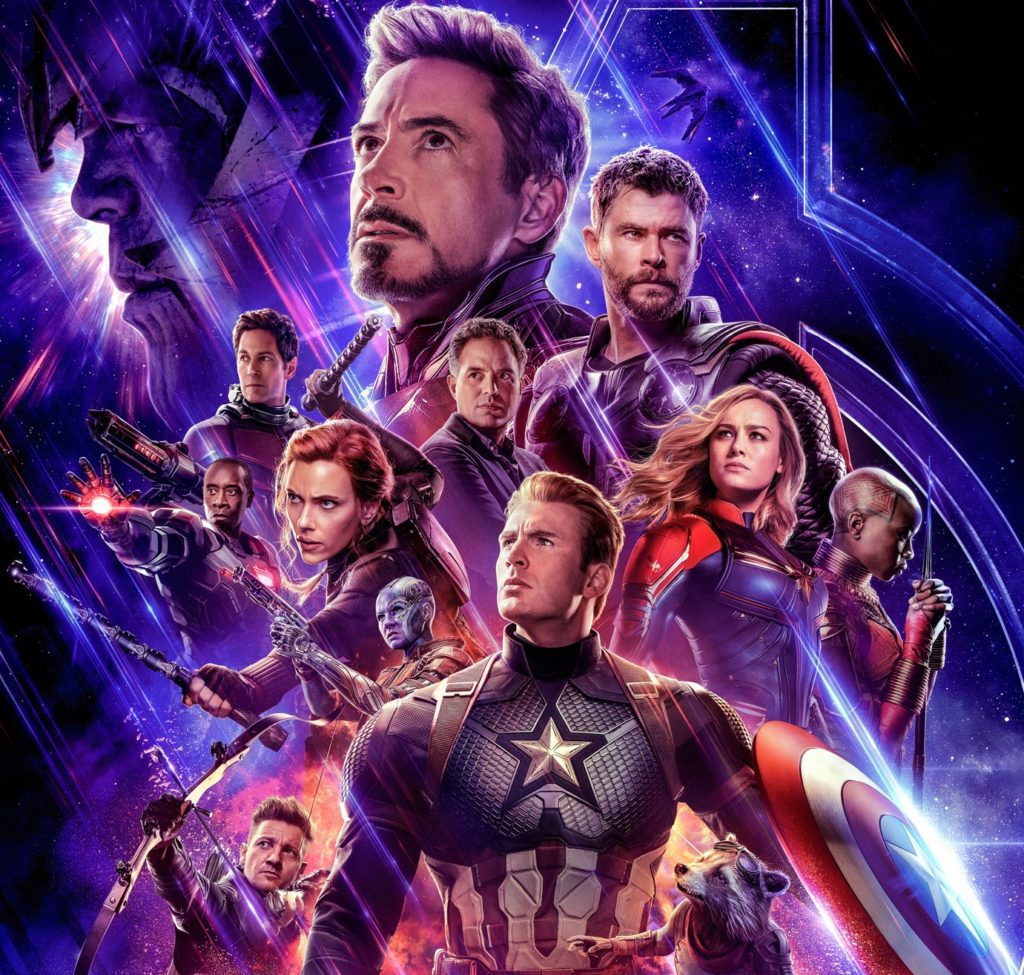
Avengers Endgame and the MCU

I tweeted this a couple of days after seeing Avengers Endgame and thought I’d save it here for posterity.

I can’t stop thinking about Endgame and this 10 year cinematic achievement… The best way I can describe my feelings is with a bit of silence, my hand on my heart, and a tear in my eye. Whatever happens next, we have lived in this time and we’ll always have these movies.

It might seem extreme to some of you, but to me (and many others) this is as incredible and fulfilling as it was improbable. It is an affirmation of who I was as a child, and the power of these stories I adored.

And I know a lot of people are “tired of the Marvel formula” and cynical about the commercialism of it. And sure, there is some truth to that. But I think these movies are (mostly) incredibly well written and crafted, and some people miss that because “super heroes”.

Reducing them to “super heroes punching things” is like looking at Star Wars and seeing “space lasers and a dog costume”. It is myopic, condescending, out of touch, and most of all plain wrong. Sure, there is that, but it is also SO MUCH more.

There is depth, there is meaning, there are messages, there is growth… Like any good pop culture story does, they tell relatable tales through fantastical imagery. And the fact that this one was built consistently over 10 years and 20+ movies is awe inspiring.

If you find yourself disagreeing, look at the reverence for things like The Three Musketeers as a literary achievement, and remember it was originally a pop series in a newspaper. It was easy to miss at the time, and I’m sure many people did because it wasn’t “noble”.

Anyway, I’m not saying everyone should love them, but I am saying that it brings me so much joy, and I’m grateful I was able to experience this becoming a reality.

Ok, rant over. Watching it again in a couple of hours.

April 30th, 2019 | No Comments

Le RDV Tech devient hebdomadaire !

Bimensuel depuis sa création, l’émission double sa fréquence de publication et sera diffusée tous les mardis à partir du 6 mars.

Ce qui change :
Des émissions qui collent plus à l’actu.
Un rendez-vous plus fiable et facile à suivre.
Une durée plus ramassée d’1h (au lieu d’1h45).
Des co-animateurs réguliers plus nombreux : Jérôme Keinborg et Jeff Clavier, mais aussi Cédric Bonnet, Korben, Cédric Ingrand, Marion Doumeingts… et aussi plus d’invités ponctuels qui apportent leur expertise.

Ce qui ne change pas :
Le podcast de référence sur l’actu tech et ses enjeux
Des explications accessibles et des analyses pertinentes
Une bonne humeur contagieuse qui vous fera sourire
Disponible gratuitement en podcast et sur le web
Indépendant et entièrement financé par ses auditeurs

Animé par Patrick Beja depuis 2009, le rendez-vous Tech est le meilleur moyen de rester informé de l’actualité Tech, toujours dans la bonne humeur.
Pour vous abonner, cherchez “rendez-vous tech” sur votre app de podcasts !
Quelques chiffres :
40.000 auditeurs mensuels
Plus de 230 épisodes
Bientôt 10 ans d’existence
1200 personnes qui soutiennent l’émission.

Plus d’infos :
contact à frenchspin point com
Site de l’émission :
frenchspin.fr
Twitter :
@NotPatrick / Facebook : NotPatrick

(more…)
February 22nd, 2018 | No Comments

Best Albums of 2017 (according to my Twitter friends)

​Suite à la question que j’ai posé hier sur Twitter, je vous livre ici la liste des réponses !
C’est un peu en vrac et les styles sont vraiment TRES Approximatifs, mais ça pourrait être utile à certains. 🙂

  • Mastodon – Emperor of sand (metal)
  • Rone – Mirapolis (electro)
  • Pg.lost – Versus (rock)
  • Fever Ray – Plunge (electro)
  • Makeup & Vanity Set – Syncro (electro)
  • The Horrors – V (rock)
  • Kendrick Lamar- DAMN (rap)
  • Orelsan – La fête est finie (rap)
  • Vald – Agartha (rap)
  • Girls In Hawaï – Nocturne (indie)
  • The War On Drugs – A Deeper Understanding (rock)
  • Charlotte Gainsbourg – Rest (chanson)
  • Mélanie de Biasio – Lilies (electro Jazz)
  • Queen of the Stone Age – Villains (rock)
  • Chinese Man – Shikantaza (electro)
  • Nova Twins – EPs (hip hop punk)
  • Nothing But Thieves – Broken Machine (alt rock)
  • Trivium – The Sin and the sentence (metal)
  • Last Train – Weathering (rock)
  • Shaka Ponk – The Evol’ (rock)
  • Human – Rag’n’bone Man (soul blues)
  • Mac Demarco – This Old Dog (rock)
  • Pale Seas – Stargazing for Beginners (rock)
  • BigFlo et Oli – La vraie vie (rap)
  • King Gizzard & the Lizard Wizard – Gumpboot Soup (prog rock)
  • Ulver – The Assassination of Julius Caesar (ambiant)
  • Billx – U Can’t Stop The Rave (electro)
  • Magna Carta Cartel – The Demon King (rock)
  • Arcade Fire – Everything Now (rock)
  • Kasabian – For Crying Out Loud (rock)
  • Buvette – Elasticity (pop)
  • Timber Timbre – Sincerely, Future Polution (folk)
  • Steven Wilson – To The Bone (prog rock)
  • Lomepal – FLIP (rap)
  • Mogwai – Every Country’s Sun (prog rock)
  • Royal Blood – How Did We Get So Dark (rock)
  • Weezer – Everything Will Be Alright In The End
  • Carpenter Brut – CARPENTERBRUTLIVE (rock)
  • Prophets of Rage (rock)
  • Hoba Hoba Spirit – Kamayanbaghi (rock)
  • Kate Tempest – Let Them Eat Chaos (rap)
  • Arch Enemy – Will to Power (metal)
  • Rilès – Brother (rap)
  • Fishback – A ta merci (pop)
  • Mat Bastard – LA LOOV (rock)
  • Elbow – Little Fictions (rock)
  • This is the kit – Moonshine Freeze (folk)
  • Hallas – Excerpt from a Futur Past (metal)
  • Ultra Vomit – Panzer Surprise! (metal)
  • Chon – Homey (rock)
  • Stupeflip – Stup Virus (rock)
  • Booba – Trone (rap)
  • Liam Gallagher – As You Were (pop)


January 13th, 2018 | No Comments

Two videos everyone should watch

As some of you might know, we’ve been talking about social networks and anger a lot on The Phileas Club.

My feeling is that they enable a kind of “anti-bubble”: a parallel of the well know “confirmation bias” bubbles, where you are also constantly exposed to “bad stuff” which you specifically hate. It is the ultimate evolution of 24h news networks (which deliver bad news all day), where you are exposed to stuff algorithmically tailored to make you sad or stressed (or, in computer speak, make you “engaged”: you are fed more of the stuff that makes you react. And guess what you’re most likely to react to: kittens… and Nazis).
It’s not that there are more bad things in the world than before, it’s just that you see the things that you hate the most all the time.

And not only that; social networks will also put you in contact with people who will answer you, personally, with comments that push your buttons. Again, not because there are more of those people than before, but because you have access to them and are systematically matched with them. And “them” might be 12 people in the whole world, but it doesn’t matter: they are always there, on every topic, and you butt heads with them every time. So to you, it might as well be everyone everywhere. It’s “people”. “People are terrible”. “People suck”. “I can’t believe people”. Except “people” might be 12 idiots that you have a direct line to and choose to argue with.

So here’s the worst part: we don’t know how to deal with this constant stream of anger and stress.
Our reactions have no measure or reason. We’res either off… or 200% MAXIMUM RAGE. There’s no other setting. There’s no topic that will just annoy us, or bother us, or upset us and that’s it. When we see something bad, we get angry. I’d argue we should learn to deal with that constant stream of anger directed at us, because it’s not going away. Anger is fine, and it’s useful. But we shouldn’t be making ourselves sick with it all the time. Save it for the things that matter. Maybe get really angry twice a year. Or every other month. But not every day or every week… It’s making us sick peeps. And it’s making anger meaningless, and it’s making conversations impossible, and it’s making living together more difficult. We need to learn to deal with this new world. And I’m sure we will; it just takes time, but it also takes awareness.

So here’s one idea: when confronted with something upsetting, let’s maybe take a step back, decide if this is a 3 out of 10 “bad thing” or an 8 out of 10. And if it’s the former, maybe walk away, don’t reply, or re-share, or boost that signal, because it’s just not worth it. And incidentally, everyone has already heard about it; what will that accomplish, other than give you an ulcer?

Anyway, there are a couple of videos which I think explain portions of the context for these issues really well. Both were sent to me in the context of heated conversations, and I think they are really important concepts to be aware of. Maybe they won’t change our attitude, and learning to deal with new environments take time. But I think they contain parts of the answer at least.

Enjoy!


January 10th, 2018 | No Comments

Vous ne me connaissez pas, mais je suis le seul podcasteur professionnel en France

(et je suis financé par des auditeurs qui paient pour du contenu gratuit)

(Article initialement publié sur Medium en décembre 2017)

Le podcast est une bête étrange… Dans le monde de la tech, un buzz a généralement deux issues possible : succès fulgurant, ou échec retentissant.
Le podcast n’a connu aucune des deux.

En 2007, les podcasts explosaient, destinés à remplacer la radio.
En 2011, ils faisaient leur “retour”, propulsés par l’usage des smartphones.
En 2015, l’émission “Serial” les remettaient encore sur le devant de la scène.
Le podcast n’en finit plus d’être redécouvert… Mais en réalité sa progression ne s’est jamais interrompue. Le média grandit dans l’ombre, indéboulonnable. Je fais partie de ceux qui l’accompagnent depuis ses débuts, et je vis de ce métier qui n’existait pas il y a quelques années.

J’aimerais vous raconter mon métier, et vous dire ce qui l’a rendu possible.
Et j’espère ainsi aider les créateurs et les journalistes qui rêvent d’un modèle plus indépendant à mieux comprendre cet environnement.

Un peu de contexte

J’ai lancé mon premier podcast en 2006. Amoureux du format, j’ai créé plusieurs émissions et j’ai continué par passion pendant plusieurs années.

En 2014, j’ai annoncé à ma communauté que je quittais mon travail (un CDI de rêve) pour tenter de vivre de mes émissions. Leur réaction a été vive, et ma campagne de financement participatif a atteint ses objectifs.

Aujourd’hui podcasteur indépendant (ou “artisan podcasteur” comme j’aime me définir), je produis et anime six émissions en français et en anglais (dont deux sont monétisées) et je participe à d’autres en tant que co-animateur.

Je gère cette activité en SAS et mon émission principale, Le rendez-vous Tech, génère environ 5000$ par mois. Les émissions sont toutes disponibles gratuitement, et le financement vient des auditeurs qui choisissent de payer.

(more…)
December 20th, 2017 | No Comments

Tips for Japan!

I get this question all the time, and every time I rewrite a crappy version of what I want to say. I’ve been thinking that I should write an article about it forever… Well, it’s never too late to stop being an idiot, so here we go!

First a tiny bit of context: I love Japan. I’ve studied the language and culture at university, I’ve lived there for years and been there many times before and after. It’s not a perfect country, and I have some very strong issues with parts of what makes life there, but overall, and especially for visiting, it is wonderful. It’s safe, fun, different, interesting, and is a big part of a lot of what geeks enjoy. It’s also close enough to what we know for total comfort, but different enough that it is a real experience.

So here’s what I tell people who ask me what they should do / see / eat in Japan:

Tokyo:

Ichiran, ramen chain restaurant. Although it’s a chain, I usually put it in the Tokyo section because that’s where I first went (Shibuya). Some of the best ramen I’ve had. I really recommend going a bit spicy and definitely al dente (kata). You choose what you want and pay at a machine before going in (very common in Japanese fast food like places). Oh, and Ippudo is a very decent altertive chain. They have places in western cities as well (when I’m in Paris, I’m there all the time).

Gyozarou, gyoza restaurant on Omotesandou. If you love gyoza, you’ll love this place (and if you don’t, I don’t even want to talk to you anymore). It was a while ago, but the miso cucumber was also kind of incredible. If it’s still there, try it.

Tsukiji fish market. If you’re coming from the west, the first day is probably going to be jetlag hell. Take advantage of this and get up early to go eat sushi breakfast/brunch at the restaurant inside the Tsukiji market, you’ll thank me. You can then go hang out in the market itself; it’s less hectic and it’s still pretty cool (early in the morning it’s kind of crazy, and honestly I’m not sure it’s super worth it).

Warning: Asakusa temple is kind of terrible. It’s a classic and you’ll probably have to go there anyway, but it’s horribly touristic and I would never go there again if I don’t absolutely have to.

Meiji shrine is lovely. It’s also one of the few places that feels quiet and natural in Tokyo. If you’re only staying in the capital, I’d definitely recommend not missing it. If you’re short on time and also going to Kyoto (or another city that isn’t a giant heap of concrete and glass), you can get that kind of feeling there instead.

Akihabara is not the best place for electronics. I mean, you’ll want to go there of course (as you should), but don’t plan on making big purchases there, it’s become just too expensive. Unless you’re looking for retro stuff of course. Otherwise, West Shinjuku (or any Yodobashi Camera / Bic Camera / etc really) will do much better.

Shibuya crossing on Saturday evening. It’s just crazy. If you have a chance, just go there and cross with the crowd, it’s kind of surreal.

Ghibli museum. It’s fun, but mostly for kids. Still a nice place to go if you’re into the movies, but be aware you should probably get the tickets BEFORE you go to japan. Each country has a limited set attributed to them, and they should be purchased very much in advance.

(more…)

August 10th, 2017 | 3 Comments

Reportage : “Patrick Beja – Artisan du Podcast”

Salut les jeunes ! Certains d’entre vous l’auront peut-être déjà vu, mais je ne l’avais pas posté ici : en décembre dernier, Florian et Korben sont venu passer deux jours chez moi pour tourner un petit reportage / docu / court métrage dans le cadre d’un projet que Korben essaie de monter. Les retours ont été très positifs, et je trouve que Florian a réussi à vraiment capturer les émotions et l’esprit que je veux faire passer dans mon travail et dans mon quotidien.

Il y a quelques jours, un auditeur m’a demandé pourquoi je n’en avais pas parlé – alors que je l’ai bien sûr partagé sur Twitter, Facebook et tout le reste – et je me suis dit qu’il était quand même un peu étrange qu’il ne figure pas sur ce site ! Erreur désormais corrigée… J’espère que vous apprécierez, et n’hésitez pas à venir dans les commentaires pour dire ce que vous en aurez pensé ! 🙂

Description de la vidéo :
Patrick Beja est un créateur et animateur de podcasts. Nous avons réalisé un portrait sur cet artisan du podcast.
Réalisation : Florian Belmonte
Production : Break The Rules (Korben) et NoRoom
Musique : Redan
Mixage audio : Antoine Grelet
Graphismes : Jérôme Keinborg

August 3rd, 2017 | No Comments